
Hair loss has a way of getting your attention. You might notice a little more shedding in the shower, a subtle loss of volume, or a part that looks just a bit wider than it used to — and once you see it, you can’t unsee it. That’s usually what sends people searching for answers, and before long you’ll find collagen supplements everywhere: powders, shots, gummies, “beauty blends” promising thicker, fuller hair with almost no effort.
But here’s the honest question: does collagen actually help with hair loss, or is it just clever marketing wrapped in a wellness label?
The truth is more nuanced than most people expect. Collagen isn’t a hair-growth drug — it doesn’t block DHT, it doesn’t reverse follicle shrinkage, and it won’t magically refill a receding hairline.
What it can do, however, is support the biological systems and scalp environment that healthy hair depends on. And for certain types of thinning (especially stress-related shedding, postpartum changes, or nutritional imbalances), that support can make a real difference.
Understanding where collagen fits into the hair-loss puzzle requires understanding what hair actually grows from: not the strand you see in the mirror, but the living follicle buried in a collagen-rich matrix beneath your scalp. Once you understand the biology of that environment, collagen’s role becomes clearer — not as a miracle cure, but as a quiet, foundational piece of the hair-health equation.
This article will break down what’s real, what’s exaggerated, and where collagen genuinely belongs in a modern, evidence-backed hair-loss plan.
Quick Answer: Collagen Supports Hair Health, But It’s Not a Standalone Regrowth Treatment
Let’s get straight to the point. Collagen does not directly regrow hair. It doesn’t block DHT — the hormone (dihydrotestosterone) that drives pattern hair loss — nor does it reverse follicle miniaturization or bring dormant follicles back to life.
Those processes are driven by deeper hormonal and metabolic forces, which require targeted interventions like finasteride, minoxidil, microneedling, red-light therapy, or fixing underlying insulin resistance. If you’re dealing with true androgenetic alopecia, collagen alone won’t stop the progression. I know because I have tried.
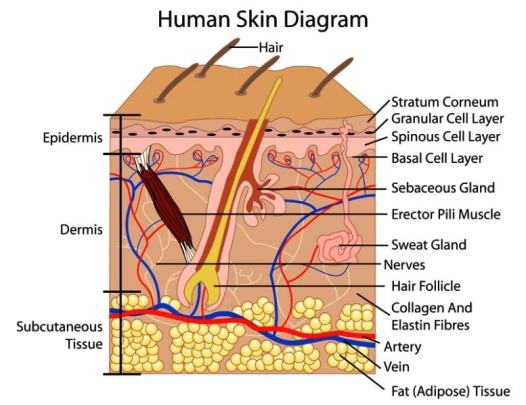
Where collagen does matter is in the environment surrounding the hair follicle. Each follicle sits inside a collagen-rich extracellular matrix — a connective-tissue “scaffolding” that stabilizes the follicle, supports blood flow, and helps maintain a healthy growth cycle. As collagen levels decline with age or due to diet, this structural support weakens, making follicles more vulnerable to inflammation, oxidative stress, and mechanical damage.
Collagen’s primary amino acid, glycine, also plays a surprisingly important systemic role. Glycine supports antioxidant production, gut integrity, metabolic health, and deeper sleep — all factors that indirectly influence hair quality and resilience.
These benefits don’t spark new growth, but they do help create a healthier biological environment in which hair can grow thicker, stronger, and with better consistency.
So while collagen shouldn’t be viewed as a hair-loss “treatment,” it can be a meaningful part of a broader strategy. It helps strengthen the foundation, improve the scalp environment, and enhance the effectiveness of proven therapies.
How Hair Loss Really Works
Hair loss isn’t a single condition, and it doesn’t follow a single pathway, especially in women. While men tend to lose hair in predictable patterns driven by DHT sensitivity, women experience thinning for a wider range of metabolic, hormonal, and nutritional reasons. This is why the same treatment doesn’t work for everyone.
The most common cause in both men and women is still androgenetic alopecia, where genetically sensitive follicles overreact to DHT and gradually shrink through a process called miniaturization.
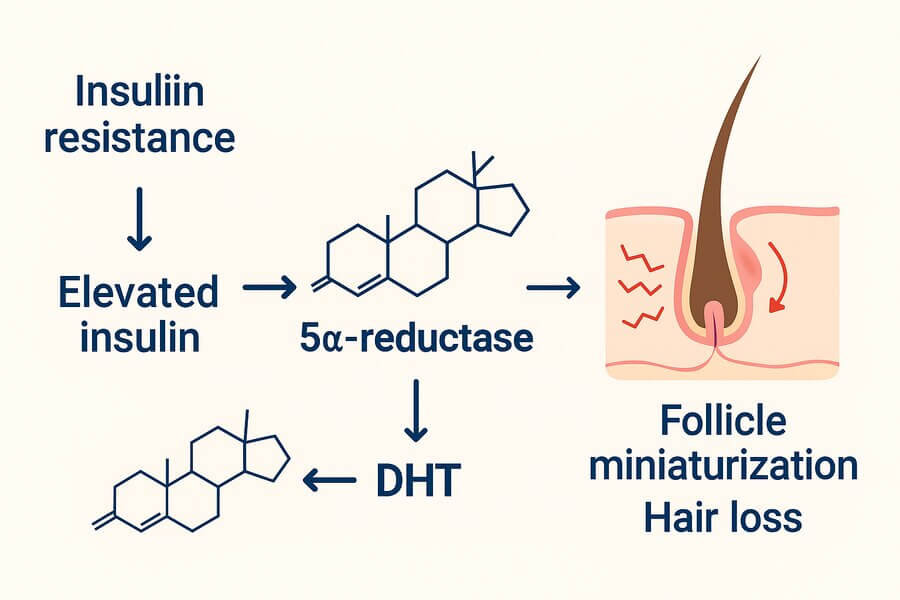
But DHT is only the starting point. As sensitivity increases, the follicle’s microenvironment deteriorates: blood flow slows, oxygen levels drop, inflammation rises, and over time the surrounding tissue begins to form fibrosis, stiffening the collagen matrix that the follicle sits in. Once this happens, regrowth becomes far more difficult.
Women, however, frequently deal with additional layers on top of this. Telogen effluvium — shedding triggered by stress, illness, nutrient deficiencies, childbirth, or crash dieting — is extremely common and can dramatically worsen thinning.
Low ferritin, thyroid dysfunction, gut inflammation, autoimmune conditions, and perimenopausal hormone changes all play a role in disrupting the hair cycle. Even without high DHT levels, anything that increases inflammation, disrupts sleep, impairs nutrient delivery, or destabilizes mitochondrial energy can push follicles into a prolonged resting phase.
Seen this way, hair loss is not just a hormonal issue — it’s a problem of the follicle ecosystem. Hormones set the stage, but inflammation, oxygenation, blood sugar regulation, mitochondrial health, and tissue remodeling determine whether a follicle grows thick, consistent hair or slowly shuts down over time.
If you want the full deep dive into every cause of hair loss, from DHT and insulin resistance to micronutrients, postpartum shedding, stress, and the best evidence-based treatments, you can read my complete hair-loss guide here.
The Role of Collagen in the Hair Follicle Ecosystem
When people think about hair, they picture the strand itself that they can see in the mirror. But the real story is everything happening underneath. Hair grows from a living organ, the follicle, and that follicle is quite literally suspended inside a collagen-rich extracellular matrix (ECM). It’s a world most people never think about, but once you understand it, collagen suddenly makes a lot more sense.
Collagen forms the structural framework around each follicle, like the supportive walls of the tiny “room” the follicle lives in. It gives the dermal sheath strength, it keeps the follicle stable as it pushes out a new hair, and it maintains the flexibility of the tissue as the follicle cycles through growth, rest, and shedding. When that matrix is healthy, the follicle has space, oxygen, blood flow, and the biochemical signals it needs to do its job properly.
But when collagen breaks down — which I’ve seen happen with age, chronic inflammation, and even long-term poor diet — the entire microenvironment around the follicle starts to harden.
At first it’s subtle: the tissue becomes a little less flexible, circulation isn’t quite as good, the follicle gets a bit “squeezed.” Over time, this process resembles the early stages of the fibrosis you see in pattern hair loss: a stiffening of the collagen scaffolding that makes it harder for follicles to stay in the growth phase. If you’ve ever noticed how a balding scalp looks shiny, that’s largely because the tissue has become tighter and less elastic.
This is why collagen matters. It doesn’t push follicles into growth the way minoxidil, DHT drugs, or microneedling can, but it supports the ecosystem those treatments depend on. Healthy collagen helps maintain softness, blood flow, and resilience in the tissue surrounding the follicle. In practical terms, it’s the difference between trying to grow a plant in loose, healthy soil versus trying to grow one in compacted clay.
In my experience, the structural side of hair loss is something most people miss. They focus heavily on hormones and topical treatments, but forget about the actual tissue the follicle is anchored in. Collagen doesn’t fix the underlying cause of hair loss, but it does reinforce the foundation that healthier hair growth relies on.
Glycine: The Missing Link Between Collagen and Hair Health
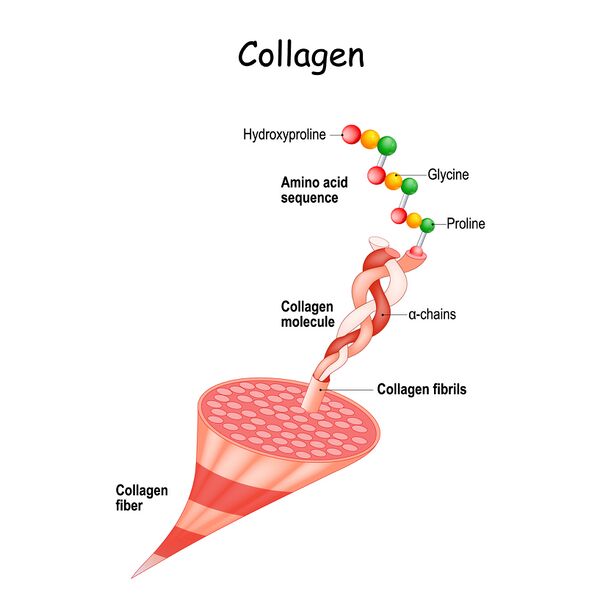
Collagen gets most of the attention, but the real unsung hero in this whole conversation is glycine — the amino acid that makes up a full third of the collagen molecule. Once you see what it actually does in the body, the connection to hair health becomes surprisingly logical.
The first thing to understand is that our bodies don’t make nearly as much glycine as they need. On paper it’s considered “non-essential” (because our bodies can make it), but in practice most people fail to produce enough, especially if they eat the way most of us do today: lean meats, boneless chicken breast, trimmed steaks, and almost no skin, cartilage, marrow, or connective tissue. Essentially, we eat the part of the animal that’s highest in methionine and lowest in glycine, which creates an imbalance in the body that can affect hair growth.
Why does this matter for hair? Because glycine touches almost every system that influences the environment that the follicles grow in. It’s required to make glutathione, the body’s main antioxidant.
If glutathione is running low, inflammation rises, and inflamed follicles don’t produce good-quality hair. Glycine also supports deeper sleep, steadier blood sugar, healthier liver function, and even heme production (the molecule in red blood cells that carries oxygen). When any of these systems falter, hair is usually one of the first places you see it.
There’s also the structural side. Collagen can’t form properly without glycine, and the extracellular matrix surrounding the follicle depends on ongoing collagen turnover. Without enough glycine, the scalp tissue becomes a little less supple, a little less oxygenated, and a little more prone to the kind of early stiffening that precedes fibrosis. When people talk about their scalp feeling “tight” or “rigid,” this is often part of the story.
What struck me most, though, is how many symptoms of glycine deficiency overlap with the complaints people have before their hair starts thinning: poor sleep, fatigue, joint aches, dull skin, slow recovery, digestive issues. Hair loss rarely shows up alone — it’s usually a sign that the system is strained somewhere upstream. Glycine doesn’t magically reverse this, but it does help repair the underlying physiology that hair depends on.
This is the part supplement marketing gets wrong. Collagen supplements aren’t “beauty powders.” They’re simply a convenient way to restore a nutrient (glycine) that modern diets unintentionally remove. And when glycine levels improve, the scalp often becomes a friendlier place for follicles to grow thicker, stronger hair.
What the Research Says: Do Collagen Supplements Improve Hair Growth?
Once you dig into the research (not the marketing), the picture becomes clearer: collagen can improve hair quality, thickness, and shedding, but it does not regrow hair in the way minoxidil or finasteride do. The improvements tend to show up in women with diffuse thinning, stress-related shedding, or poor nutrient status, not in advanced androgenetic alopecia.
Most human trials combine collagen with other supportive nutrients (biotin, zinc, amino acids), so we can’t credit collagen alone. But the results still point toward meaningful support for the hair-growth environment.
One of the stronger trials examined a marine collagen supplement in women with thinning hair.
It wasn’t a “pure collagen” study (the supplement contained other amino acids), but the results are still useful for understanding how collagen-rich nutrients affect the scalp environment. After three months, women taking the supplement saw about a 20% reduction in daily shedding, while the placebo group actually shed more hair over the same period. By six months, there was also an 8% increase in the diameter of fine, vellus-like hairs, whereas the placebo group continued to thin.
Another study looked at a collagen and amino acid complex in women with telogen effluvium.
After 16 weeks, hairs in the growth phase (anagen) increased from about 68% to 72% with the drinkable formula, and from roughly 69% to 76% with the tablets. Shedding-phase hairs (telogen) dropped as well — from 19.9% to 16.6% with the drinkable solution and from 31.4% to 24.3% with the tablets.
The combination protocol produced the strongest response, cutting telogen hairs from 46% to 24%. Hair density and overall hair quality also improved. Although collagen wasn’t the only ingredient, the study does show that collagen-rich nutritional support can help the hair cycle recover from stress-related shedding.
A 12-week randomized controlled trial on a hydrolysed collagen supplement (with vitamin C) found meaningful improvements in both skin and hair appearance. Skin collagen fragmentation decreased by 44.6%, hydration rose 13.8%, and elasticity improved 22.7% versus placebo.
On the hair side, trichoscopy showed an 11% reduction in scalp scaling and a 31.9% improvement in overall hair appearance, even though the 27.6% increase in total hair count wasn’t statistically significant (the standard deviation was too high). In short, collagen didn’t trigger dramatic new growth, but it did make the existing hair look healthier and better conditioned.
Dermatology reviews from academic institutions echo the same theme: collagen is safe, possibly helpful for thickness and reduced shedding, but the evidence for reversing androgenetic alopecia is limited. The improvements appear to come from supporting the follicle microenvironment, not from triggering new growth the way DHT-modifying medications do.
So collagen isn’t a miracle cure, but it is a legitimate supportive nutrient. And in a field full of overpromised solutions, modest but measurable improvements are often more trustworthy than the big claims.
When Collagen Can Actually Help With Hair Loss
Collagen isn’t a magic switch for hair growth, but there are situations where it genuinely makes a noticeable difference. These tend to be the cases where the follicle itself isn’t “broken,” but the environment around it is under strain. Over the last few years of reading studies and talking to people going through thinning, I’ve noticed a consistent pattern: collagen helps most when the issue is more about stress, nutrition, or tissue quality, not DHT.
One of the clearest examples is telogen effluvium — the kind of diffuse shedding that follows stress, illness, childbirth, calorie restriction, or major lifestyle changes. In these situations, the follicles are still healthy; they’ve simply shifted into a resting phase after a shock to the system.
Because collagen (and glycine) supports deeper sleep, steadier blood sugar, and lower inflammation, people often describe their hair “settling down” faster when they start taking it. It doesn’t force the follicle to grow, but it helps the body return to its baseline state more smoothly.
I’ve also seen it help in people who simply weren’t eating enough protein or who were unintentionally eating a very “collagen-poor” diet — lots of boneless chicken breast, little to no skin or connective tissue, almost no slow-cooked meats.
When you look at what modern diets replaced, it’s obvious why this matters. Most people today get plenty of methionine (from muscle meats), but very little glycine (from collagen-rich cuts), and that imbalance puts extra strain on the body’s antioxidant and connective-tissue systems. When those systems tighten up, hair is often one of the first places it shows.
Women with postpartum shedding are another group where collagen seems to genuinely help. Some of this is coincidence (postpartum hair loss resolves naturally), but many new mothers are dealing with disrupted sleep, nutrient depletion, blood sugar swings, and physical stress, all areas glycine helps stabilize. Even if collagen isn’t directly regrowing hair, it’s supporting the physiology that hair depends on.
I’ve also come across people who noticed benefits after injuries, surgery, or periods of high inflammation. When the body ramps up repair work, collagen demand goes through the roof. If you’re not eating nose-to-tail or consuming gelatin, your body has to pull glycine from somewhere, and it often sacrifices “less essential” tissues first, which unfortunately includes hair quality.
Finally, collagen can make a real difference when paired with microneedling, minoxidil, or red-light therapy. These treatments all rely on healthy extracellular matrix turnover and good tissue remodeling. When collagen intake is low, the scalp can feel tight or rigid — something you can literally feel with your fingertips. Improving collagen status doesn’t turn microneedling into a miracle, but it does seem to make the results more consistent and the recovery smoother.
What Types of Hair Loss Can Collagen Help With?
| Type of Hair Loss | Can Collagen Help? | Why (Short Explanation) |
| Telogen Effluvium (stress, illness, crash dieting) | Yes | Supports recovery by improving nutrient status, reducing inflammation, aiding sleep, and stabilizing the hair cycle. |
| Postpartum Shedding | Yes (supportive) | Helps replenish depleted nutrients and supports tissue repair and sleep, which speeds return to normal cycling — but won’t stop the shedding itself. |
| Diffuse Thinning in Women (non-hormonal) | Yes / Maybe | If related to nutritional imbalance, stress, inflammation, or low protein intake, collagen can improve hair quality and reduce shedding. |
| Nutrient Deficiency–Related Hair Loss (low protein, low iron, low zinc) | Maybe (supportive only) | Can help with protein balance and tissue repair, but deficiencies like low ferritin or zinc must be corrected directly. |
| Thyroid-Related Hair Loss | No / Supportive Only | Treating the thyroid is essential. Collagen may improve texture or breakage, but not the underlying cause. |
| PCOS / Hormonal Imbalance | No | Collagen doesn’t affect androgen levels or cycle regulation; may mildly support inflammation but won’t change the cause. |
| Androgenetic Alopecia (male/female pattern hair loss) | No (for regrowth) | Doesn’t block DHT or reverse follicle miniaturization. May improve hair quality around remaining follicles. |
| Alopecia Areata (autoimmune) | No | Autoimmune-driven; collagen does not affect immune attack on follicles. |
| Hair Breakage / Weak Hair Shaft | Yes | Helps strengthen existing hair fibers, reduces breakage, improves shine and resilience. |
| Scalp Aging / Reduced Tissue Quality | Yes | Collagen supports the extracellular matrix and may improve scalp elasticity and microcirculation environment. |
When Collagen Won’t Help
As useful as collagen can be in the right situations, there are also very clear cases where it simply won’t make a difference — and it’s best to be blunt about this so you don’t waste time or money. Supplements in general tend to get wrapped in wishful thinking, and collagen is no exception. If you understand what collagen can’t do, you’re far less likely to waste time, money, or hope on the wrong solution.
The first and most important point is this: collagen will not reverse androgenetic alopecia (AGA). Once a follicle has miniaturized significantly under years of DHT sensitivity, the problem isn’t a lack of structural support — the problem is hormonal signaling and tissue remodeling at the follicle level.
Collagen can make the surrounding environment healthier, but it can’t turn off the biological switch that caused the follicle to shrink in the first place. If you’re dealing with a clearly receding hairline, widening part, or Norwood-pattern thinning, collagen alone won’t stop the progression.
It also won’t do much when there is scar tissue present. Fibrosis around the follicle (that shiny, tight feel you often see in long-standing bald areas) dramatically reduces the follicle’s ability to receive oxygen, nutrients, and growth signals.
At that point, structural protein intake isn’t the limiting factor; blood flow and cellular signaling are. Once fibrosis sets in, even powerful treatments have a harder time working, so expecting collagen to penetrate that problem is unrealistic.
Collagen similarly won’t fix hair loss driven by thyroid disease, autoimmune disorders, severe iron deficiency, or hormonal imbalances like PCOS or perimenopause. These conditions disrupt the hair cycle from the inside out. No amount of glycine or collagen peptides will correct a sluggish thyroid or restore ferritin levels high enough to keep follicles in the growth phase. If those underlying issues remain unaddressed, collagen may improve hair texture — but not the actual hair count.
Another area where people tend to overestimate collagen is rapid, aggressive shedding, especially when it comes out of nowhere. If someone is losing handfuls of hair suddenly, that’s almost always telogen effluvium, thyroid dysfunction, iron loss, or medication-related. Collagen might support recovery, but it won’t stop the acute shedding itself. You have to go after the trigger, not the symptom.
And finally, collagen won’t help if the rest of the system it depends on is already overwhelmed. If someone is chronically sleep deprived, insulin resistant, inflamed, or barely eating enough protein to meet basic needs, collagen is like patching a wall while the foundation is crumbling. It can still support the margins, but it’s not strong enough to overcome systemic strain.
This doesn’t make collagen useless — far from it. It just means collagen works best when the follicle still has life in it and the underlying biology is capable of responding. Knowing where collagen won’t help makes it much easier to understand where it actually can.
Collagen vs. Biotin vs. Keratin: What’s Actually Useful?
If you’ve ever wandered down the supplement aisle or scrolled through the “hair growth” section online, you’ve probably noticed the same three ingredients popping up everywhere: collagen, biotin, and keratin. They get lumped together as if they all do the same thing, but in reality they play very different roles — and their usefulness depends entirely on why someone is losing hair in the first place.
Let’s start with biotin, because it’s the one that gets the most hype. Biotin is essential for keratin production, so on the surface it makes sense that it shows up in almost every hair supplement on the market.
The truth, though, is that biotin deficiency is actually very rare. When a true deficiency does occur — often from long-term antibiotic use, gut issues, or certain genetic conditions — hair can become brittle or thin, and supplementing biotin helps quickly.
But for the average person, especially someone with androgenetic alopecia, extra biotin doesn’t do much. People often think it helps because their nails get stronger, but nails respond much more readily to biotin than hair does. If your diet is normal and your gut is functioning, biotin is rarely the missing piece.
Keratin supplements fall into a similar category. Keratin is the actual protein that hair is made of, which again sounds promising. But eating keratin doesn’t translate into producing keratin in the follicle — it’s simply broken down like any other dietary protein.
The follicle doesn’t get “keratin directly,” so keratin supplements don’t offer an advantage over just eating adequate protein. Some people notice cosmetic improvements, such as smoother hair and less breakage, but that’s more of a hair-shaft effect, not follicle support.
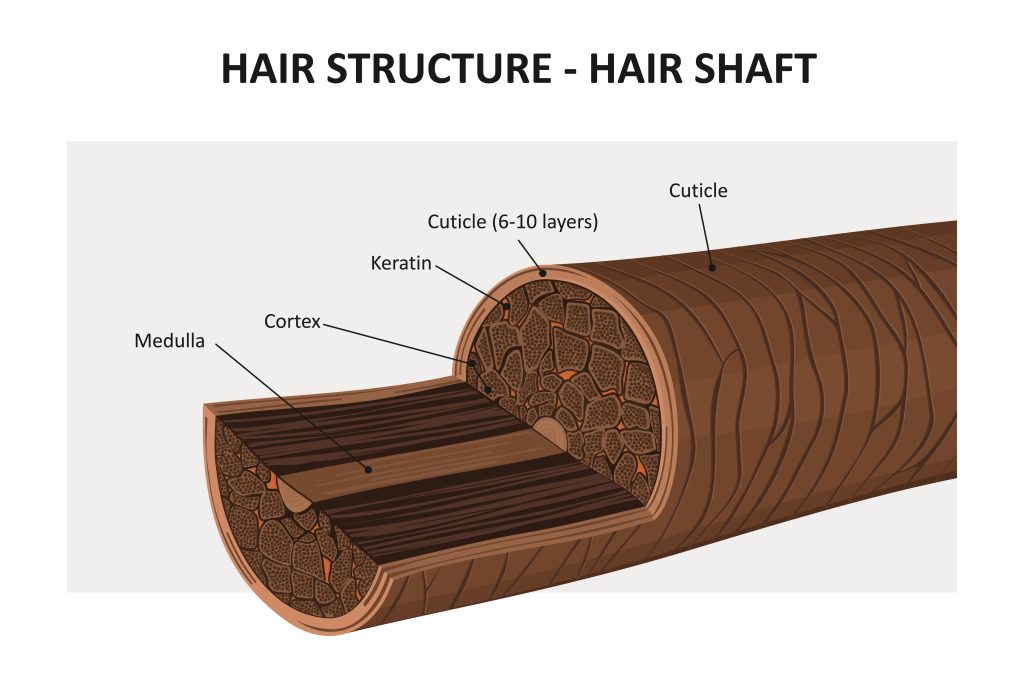
Collagen sits in a different category altogether. It isn’t about supplying raw material for the hair strand the way keratin theoretically would. Instead, collagen supports the environment the follicle lives in.
It influences the extracellular matrix, blood flow, inflammation levels, and the structural integrity of the scalp tissue, all upstream factors that determine whether follicles can grow thick, healthy hair. Collagen won’t override hormonal hair loss, but it does contribute to the resilience of the system that hair depends on, especially when glycine intake has been low for years. To summarize:
- Biotin helps when you’re deficient.
- Keratin helps the hair shaft, not the follicle.
- Collagen supports the scaffolding and physiology that allow hair to grow well.
They aren’t interchangeable, and they aren’t competing with each other, they just solve different problems. The trick is figuring out which problem you actually have. And for most people dealing with early thinning or stress-related shedding, collagen is the one that fits the real-world biology best.
How Much Collagen Do You Need for Hair Support?
One thing I learned pretty quickly when looking into collagen is that there’s no official “hair growth dosage.” Collagen wasn’t created as a hair supplement, it’s simply a concentrated source of the amino acids (especially glycine) that most modern diets lack. So instead of thinking in terms of a magic dose, it’s better to think in terms of how much collagen it actually takes to fill that nutritional gap.
Most clinical studies that reported improvements in hair thickness or reduced shedding used somewhere between 2.5 and 10 grams of hydrolyzed collagen peptides per day. That lines up with what people tend to notice in real life: a few grams does something, five grams does more, and anything beyond 10 grams is usually unnecessary unless you’re also using it for joint or skin benefits.
Personally, I’ve found that 10 grams feels like a “therapeutic” amount (enough to actually shift sleep quality, inflammation, and recovery) while 5 grams is more of a comfortable maintenance dose.
The nice thing about collagen is that it doesn’t require timing or cycling. You can mix it into your morning coffee, blend it into a shake, or just stir it into water. Its benefits accumulate quietly over time, not in the stimulant-like way some supplements act.
The other piece that rarely gets mentioned is vitamin C. Your body cannot assemble collagen fibers without vitamin C, which is why traditional diets naturally paired the two. You don’t need megadoses; even 100–200 mg from whole food is enough to support collagen synthesis. But if you’re taking collagen daily, it makes sense to have vitamin C in the background so the body can actually use it.
It’s also worth noting that collagen isn’t the only way to support glycine intake. Pure glycine powder is inexpensive, dissolves easily, and offers a more direct way to reach the 2.5 – 10 grams of glycine per day that many researchers consider ideal.
Some people feel the benefits of glycine more immediately, such as deeper sleep, calmer mood, better blood sugar control, but collagen provides the broader spectrum of structural amino acids that support the follicle environment.
No supplement, including collagen, works overnight. With consistent use, most people who respond will notice changes in the quality of their hair within 8–12 weeks — things like better texture, fewer broken strands, and less shedding in the shower. It’s subtle at first, then gradually becomes obvious.
The key is consistency, not perfection. Hair grows slowly, and the tissues around the follicle remodel even more slowly. But if collagen is going to help you, it usually becomes clear by the three-month mark.
Best Collagen Sources for Hair Health
You don’t need exotic products to increase collagen — the best sources are the same ones humans ate for most of history. The problem is simply that modern diets no longer include them.
Bone broth is still one of the richest natural sources of collagen, and a personal favorite. When it cools and turns to jelly, that wobble is pure gelatin, essentially broken-down collagen your body can use immediately. It’s an easy add-in if you already cook soups or slow stews, though you’d need a fair amount to match what a supplement can provide.
Gelatin is another practical option. Old-fashioned gelatin blocks or a spoonful of beef gelatin in tea give you a concentrated dose of glycine without much effort. It’s inexpensive, simple, and far closer to what our diet used to look like. (Tip – grass-fed beef is always better than grain-fed where possible).
Collagen-rich foods like chicken skin, fish skin, oxtail, shanks, short ribs, and slow-cooked cuts also contribute meaningfully. These were once staples because no one wasted the connective tissue, and ironically, those “less desirable” parts turn out to be some of the most supportive for hair, skin, and joint health.
Although I always recommend real food over supplements where practicable, for most people, the easiest and most consistent option is still a hydrolyzed collagen peptide powder.
A single scoop provides the same collagen you’d get from an enormous bowl of broth, and it mixes quietly into coffee or water without changing much of anything. Marine or bovine collagen both work; the differences between them matter far less than using whichever one you can stick with regularly.
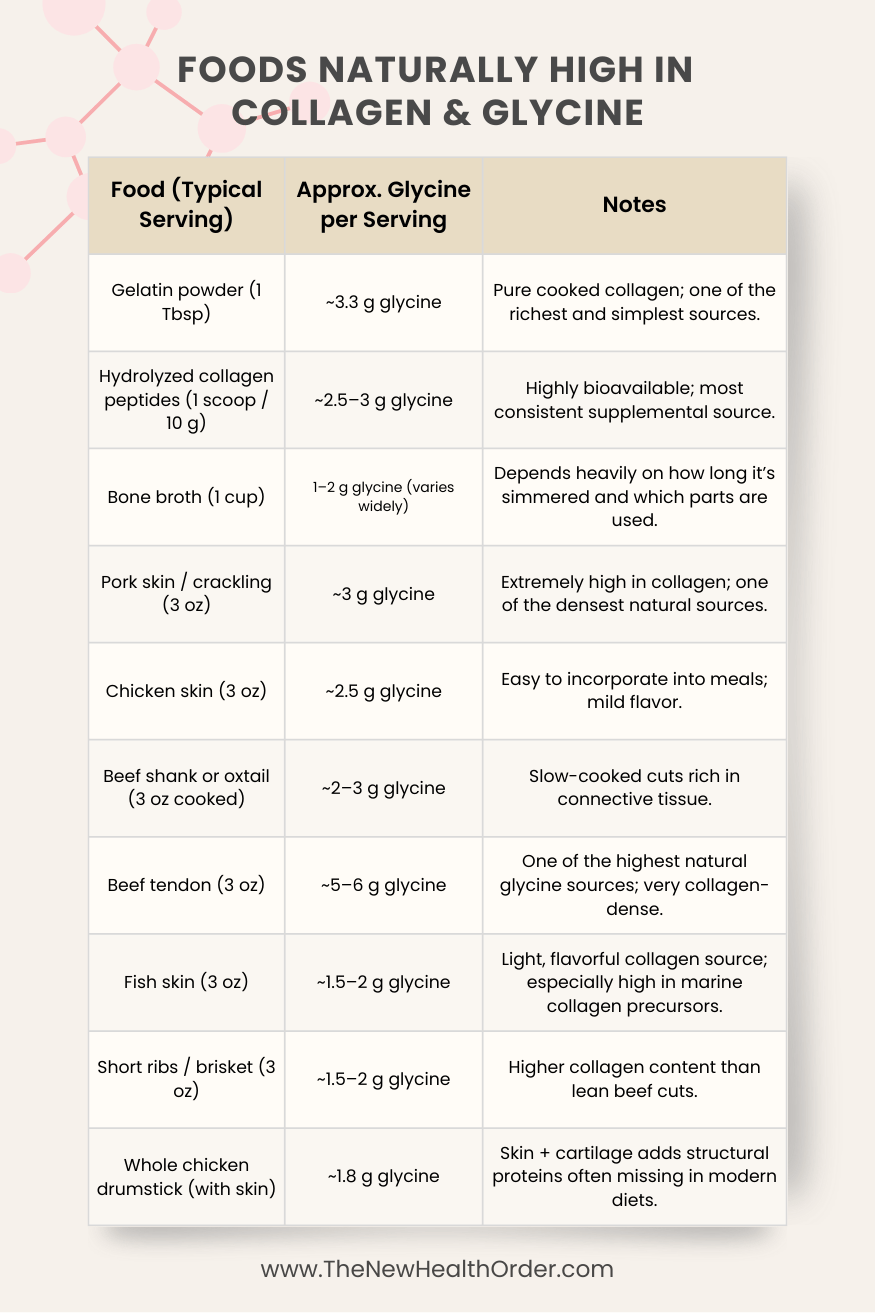
Foods Naturally High in Collagen & Glycine
| Food (Typical Serving) | Approx. Glycine per Serving | Notes / Why It’s High |
| Gelatin powder (1 Tbsp) | ~3.3 g glycine | Pure cooked collagen; one of the richest and simplest sources. |
| Hydrolyzed collagen peptides (1 scoop / 10 g) | ~2.5–3 g glycine | Highly bioavailable; most consistent supplemental source. |
| Bone broth (1 cup) | 1–2 g glycine (varies widely) | Depends heavily on how long it’s simmered and which parts are used. |
| Pork skin / crackling (3 oz) | ~3 g glycine | Extremely high in collagen; one of the densest natural sources. |
| Chicken skin (3 oz) | ~2.5 g glycine | Easy to incorporate into meals; mild flavor. |
| Beef shank or oxtail (3 oz cooked) | ~2–3 g glycine | Slow-cooked cuts rich in connective tissue. |
| Beef tendon (3 oz) | ~5–6 g glycine | One of the highest natural glycine sources; very collagen-dense. |
| Fish skin (3 oz) | ~1.5–2 g glycine | Light, flavorful collagen source; especially high in marine collagen precursors. |
| Short ribs / brisket (3 oz) | ~1.5–2 g glycine | Higher collagen content than lean beef cuts. |
| Whole chicken drumstick (with skin) | ~1.8 g glycine | Skin + cartilage adds structural proteins often missing in modern diets. |
In the end, the best source is simply the one you’ll actually use. Collagen works through consistency, not intensity, so pick the form that fits your routine and let it accumulate over time.
Final Verdict
Collagen isn’t a hair-growth treatment in the traditional sense, and it won’t compete with things like finasteride, minoxidil, microneedling, or red-light therapy. Those work by directly influencing follicle signaling, blood flow, and the hormonal forces behind pattern hair loss. Collagen works on a different level — quieter, slower, but still meaningful.
What collagen really does is improve the environment your follicles live in. It strengthens the extracellular matrix, supports better tissue repair, steadier blood sugar, lower inflammation, and more restorative sleep through its glycine content. When those systems run well, the scalp becomes a healthier, more permissive place for hair to grow, especially in cases of stress-related shedding, postpartum thinning, diffuse loss, or nutritional imbalance.
It won’t bring back areas that have already miniaturized from years of DHT sensitivity, and it won’t stop pattern baldness on its own. But it can make other treatments work better and help your hair look and feel thicker, stronger, and more resilient over time. In a world where most supplements promise miracles, collagen offers something more realistic: support, stability, and a healthier foundation for whatever hair strategy you’re already using.
If you want dramatic regrowth, collagen isn’t the answer. But if you want a stronger scalp, better recovery, and a more robust follicle environment, it’s one of the simplest, safest additions you can make.
FAQs
Does collagen actually help with hair loss?
Collagen can reduce shedding and improve hair quality, especially in stress-related thinning, but it does not reverse hormone-driven pattern hair loss.
How long does collagen take to help hair?
Most people who respond notice improvements in texture, shedding, or fullness within 8–12 weeks, as collagen supports the scalp’s structural environment.
Is marine or bovine collagen better for hair?
Both work similarly for hair. Marine collagen dissolves more easily, but the body breaks both types into the same amino acids, including glycine.