

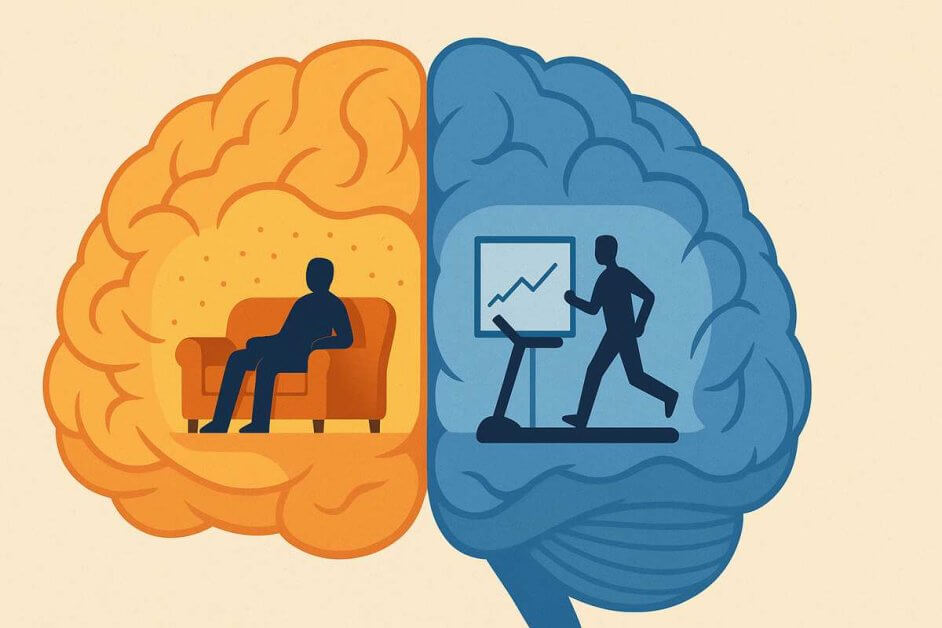
What if the problem is not that you need more motivation — but that you have trained yourself to need more stimulation?
That is usually what people mean when they worry about “too much dopamine”: ordinary activities feel less rewarding, while gaming, scrolling, caffeine, music or other high-reward habits become harder to resist.
This article looks at why rewards can lose their punch, why you can keep wanting something you enjoy less, what a “dopamine crash” really means, and how to make ordinary rewards feel rewarding again.
The aim is to understand what repeated stimulation is teaching your brain to expect — and what you can do when everyday life starts feeling flat without it.
What Do People Really Mean by “Too Much Dopamine”?
When most people worry about having “too much dopamine,” they are not talking about a medically high dopamine level. They mean something more familiar: they feel overstimulated, increasingly drawn to easy rewards, or unable to enjoy ordinary things without adding something extra.
That is not the same thing as literally having too much dopamine.
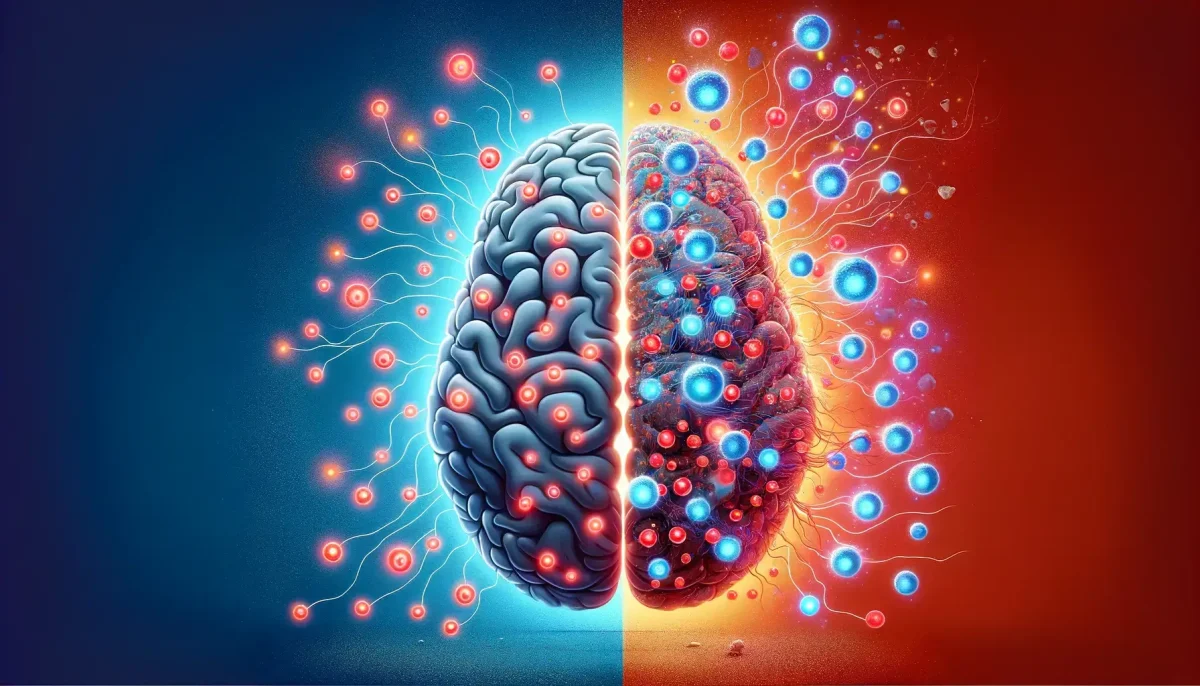
Dopamine does not exist as one brain-wide level that rises every time you do something enjoyable. Different dopamine pathways and receptors are involved in different functions, from movement and learning to motivation and reward.
But for everyday activities such as gaming, scrolling, food, caffeine or music, the more useful question is:
Have I become so used to reward and stimulation that ordinary things no longer feel as rewarding?
Can You Overstimulate Your Reward System?
In a sense, yes — but probably not in the way the term is usually used online.
Your reward system is built to learn from experience. Something enjoyable catches your attention, you remember it, and you become more likely to seek it again.
But repeated exposure can also make the same reward less enjoyable.
Researchers call this hedonic decline. Your first slice of pizza is usually better than your fourth. A song you love can become unbearable after playing it 50 times. A game that felt exciting for weeks can eventually become something you open almost automatically. Habituation, satiation and changes in attention can all contribute.

This does not mean you have used up your dopamine or permanently desensitized your reward system. Nor does it mean that every highly stimulating activity is harmful.
It simply means that rewards can lose some of their impact with repetition.
The stranger part is that enjoying something less does not necessarily make you want it less.
So why do we sometimes keep chasing things long after the pleasure has started to fade?

Get Your Free Book!
Enter your email to get the free book and occasional updates from The New Health Order.
Why Do You Keep Wanting Things You Enjoy Less?
One of the strangest things about reward is that you can want something quite badly without actually enjoying it very much.
Think about a game you were obsessed with when you first bought it. At the beginning, you cannot wait to play. A few weeks later, the excitement fades. You might even be bored while playing — yet somehow you still find yourself opening the game every evening.
So what are you chasing?
One useful distinction in reward neuroscience is between “liking” and “wanting.” Liking refers more closely to the pleasure you actually get from something. Wanting is the motivation that pulls you toward it. Dopamine appears to be much more important to this second process — particularly the motivational pull that rewards and their associated cues can acquire.
Those two systems do not always move together.

A notification sound, the sight of your console, opening Instagram, walking past the cupboard where you keep snacks — these cues can start triggering an urge before you have consciously decided whether you even want the thing itself. Researchers sometimes describe this as incentive salience: learned cues acquire motivational importance and begin pulling behavior toward the reward.
This is how you can end up in an odd situation: you enjoy the activity less, but still feel drawn toward it.
This separation between wanting and liking is especially clear in addiction research, where cues can continue driving powerful “wanting” even as the pleasure itself fades. Everyday habits are not necessarily operating at the same intensity, but the distinction helps explain why wanting something and enjoying it are not always the same thing.
There is also a simpler behavioral layer. Habits remove some of the decision-making altogether. If you always open a game after dinner, check your phone whenever work gets difficult, or scroll in bed every night, eventually the context itself starts prompting the behavior.
You are no longer sitting there thinking, this will be incredibly enjoyable.
Sometimes you are barely thinking at all.
That is why judging a behavior purely by how pleasurable it feels can be misleading. You can stop enjoying something long before you stop feeling pulled toward it.
Social Media, Gaming and Other High-Reward Activities
We rarely have to stay bored anymore.
If you are bored, pull out your phone. If one video is dull, swipe. If a game stops being exciting, start another match. There is almost always something new waiting a few taps away.
What makes these activities so compelling is not a dangerous dose of dopamine. It is the way they combine reward, novelty, anticipation and cues that keep pulling you back.

Social media is an obvious example. Most posts are forgettable, some are mildly interesting, and occasionally one is exactly what you wanted to see. You never quite know what the next swipe will bring.
Brain-imaging research suggests that social-media cues can strongly engage systems involved in reward and attention, especially in people with problematic use. But that does not mean ordinary scrolling produces the same brain changes seen with addictive drugs.
Gaming builds rewards directly into the experience: levels, loot, rankings, wins, near misses, daily rewards and the constant possibility that the next game will be better.
You can spend two hours playing, realize you barely enjoyed yourself, close the game in frustration — then find yourself thinking about playing again half an hour later.
Research on problematic gaming finds differences in reward processing, cue reactivity and executive-control networks, although we should not assume the same changes occur in everyone who plays regularly.
The same basic pattern can show up with food, shopping, pornography and other rewarding behaviors — not because they are all interchangeable “dopamine activities,” but because cues, anticipation and habit can make many different rewards hard to resist.
A better test is to look at what the behavior is actually doing:
Are you doing it automatically?
Are you enjoying it as much as you used to?
And when nothing stimulating is available, does ordinary life suddenly feel painfully dull?
If scrolling itself has become difficult to control, see our guide to breaking compulsive social media use.
Does “Dopamine Stacking” Actually Matter?
Imagine going to the gym. You take a pre-workout, put on your favorite music, scroll between sets and maybe watch a YouTube video while doing cardio.
None of those things is inherently a problem. Music can make exercise more enjoyable, and caffeine can improve performance.
But what happens if you do all of them, every single time?
A popular explanation is that you are “stacking dopamine”: exercise gives you one hit, music adds another, caffeine adds another, and scrolling adds another until ordinary exercise can no longer compete.
The brain does not work according to such a neat equation.
The useful part is not the size of the dopamine “stack” — it is what you repeatedly train yourself to expect alongside the activity.
If every workout is repeatedly paired with caffeine, loud music, your phone and a particular routine, those things can gradually become part of what you expect when it is time to train. Expectation itself can influence motivation, perceived effort and performance.
So try removing everything.
No pre-workout. No headphones. Phone stays in the locker.
The workout may suddenly feel a lot flatter.
That does not mean you damaged your dopamine system. It may simply mean that what used to be going to the gym has become going to the gym plus a whole package of stimulation you now associate with it.
Music can make a workout better. Coffee can make the morning better. Your phone can make waiting less boring.
But if everything needs something else layered on top before it feels engaging, that may be worth paying attention to.
What Is a “Dopamine Crash”?
A “dopamine crash” is the flat, unmotivated feeling that can sometimes follow a period of intense stimulation or reward. After hours of gaming, scrolling or a big night out, normal life can suddenly feel dull by comparison.
Part of that may simply be contrast. Your brain has spent hours anticipating the next message, level, novelty or reward — and then suddenly those cues are gone.
What is less certain is the popular idea that every dopamine “peak” must be followed by an equal drop below baseline. That is a much cleaner story than the biology really allows.
So if you feel flat after something highly stimulating, the experience itself is real. But it does not necessarily mean you have depleted your dopamine.
Sometimes you have simply gone from a lot of reward and stimulation to very little — and the difference feels bigger than it normally would.
Can You Reset Your Response to Reward?
Probably — just not by “resetting dopamine” in the literal sense.
If something has become less enjoyable but increasingly automatic, the simplest move is often to make it less available for a while.
That might mean taking a few days away from a game you are no longer enjoying, deleting social media from your phone rather than relying on willpower, or stopping yourself from filling every spare minute with something stimulating.
You are not waiting for a dopamine tank to refill. You are simply interrupting the cue → urge → reward loop and creating some distance from the habit.
It can also help to strip away some of the extras.
If every workout requires caffeine, music and your phone, occasionally train without the full package. Eat without scrolling. Go for a walk without immediately putting headphones in. Let yourself stand in line without automatically reaching for your phone.
Not because boredom magically heals dopamine receptors, but because every dull moment does not need to be rescued with stimulation.
Giving a reward some space can also make it feel fresher when you come back to it.
You do not need to remove everything enjoyable from your life. Just notice when you have gone from choosing a reward because you enjoy it to needing constant stimulation to make ordinary life feel interesting.
That is probably the closest thing to a useful “dopamine reset”: less constant stimulation, more space between rewards, and fewer automatic habits.
When Is “High Dopamine” Actually a Medical Problem?
There are situations where unusually high or dysregulated dopamine signaling is a genuine medical issue — most clearly with powerful stimulant drugs and medications that directly affect dopamine. Cocaine, methamphetamine and some prescription stimulants can push dopamine signaling far beyond what happens during ordinary rewards.
Dopamine agonists used to treat Parkinson’s disease are another clear example. In some people, they can produce striking changes in reward-seeking behavior, including compulsive gambling, shopping, eating or sexual behavior.
Dopamine is also involved in conditions such as psychosis and mania, although it would be misleading to describe either as simply “too much dopamine.” In psychosis, for example, the strongest evidence points to altered dopamine function in particular brain circuits rather than dopamine being globally high everywhere.
If you develop hallucinations, paranoia, severe agitation, dramatic changes in sleep or behavior, or new compulsive behaviors after starting a drug or medication, that is something to discuss with a medical professional rather than trying to fix with a “dopamine detox.”
For most people worried about everyday overstimulation, the issue is usually much simpler: have your habits made ordinary rewards harder to appreciate?
Final Thoughts
You probably do not need to worry that music, gaming, social media or a good workout are flooding your brain with dangerous amounts of dopamine.
But repeated rewards can lose their punch, and habits can keep pulling you back even after the enjoyment starts to fade.
That is the part worth paying attention to.
Notice when wanting starts to outpace liking, when boredom becomes difficult to tolerate, or when something you once chose for fun starts to feel automatic.
The goal is not to have less dopamine.
It is to make sure your rewards are still actually rewarding.
2 Responses
Thank you for this article. This is the best-detailed one on Dopamine with charts that I have seen on the net as of yet.
Thank you very much, I’m glad you enjoyed it and hope you can put it to good use!