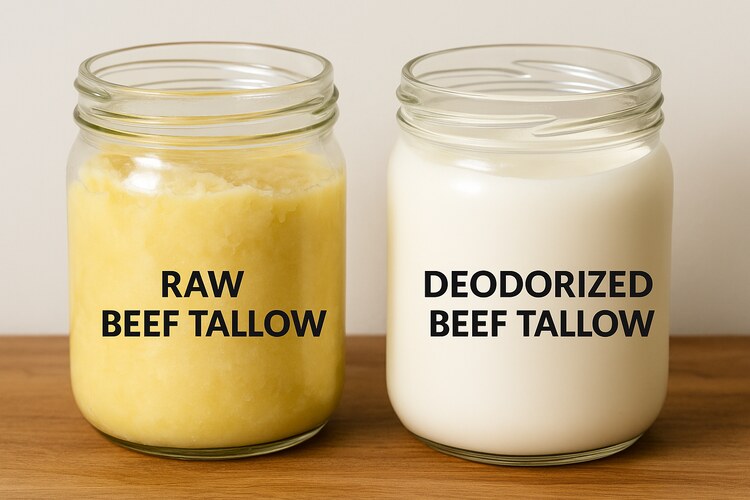
As tallow-based skincare has made its way back into the mainstream, one question keeps coming up: what’s the difference between deodorized and non-deodorized tallow—and does it matter? The confusion is understandable. Some people assume deodorized tallow is overly processed, while others believe raw tallow is the only “natural” option. In reality, the distinction is far more practical than ideological.
Both forms of tallow share the same fatty-acid profile that makes this traditional ingredient so effective for skin. The real difference lies in how the fat is prepared after rendering and how that affects its scent, texture, and ease of use. This guide explains, in plain language, what deodorization actually is, how it changes (and doesn’t change) the tallow itself, and how to decide which version is right for your skin or your kitchen.
What Is Deodorized Tallow?
Beef tallow begins as nothing more than rendered beef fat — a traditional, nutrient-dense ingredient that humans have used for cooking, skincare, and preservation for centuries. In its natural, unrefined state it carries a distinctly beefy aroma and a warm, yellowish color. Some people enjoy that reminder of its origins; others don’t. And when tallow is used in skincare, the natural scent can become a barrier for newcomers who want the benefits without smelling like a roast.
See this article here for the many benefits of using tallow for skin care.
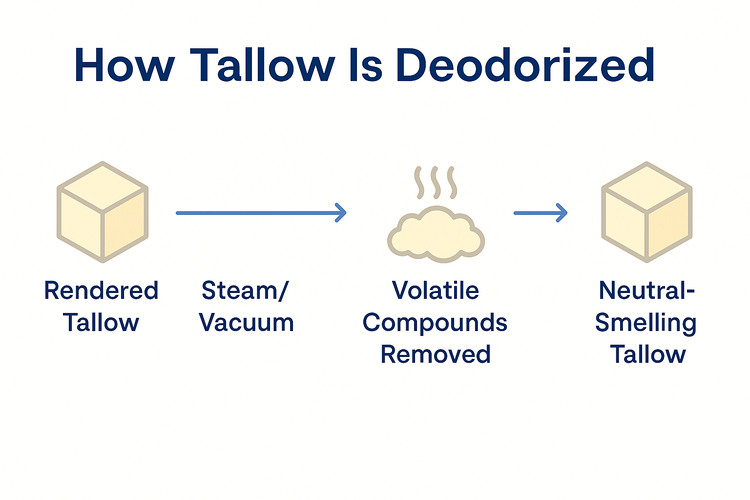
This is where deodorized tallow enters the picture. Contrary to what you might read online, deodorizing isn’t some mysterious chemical process. It’s simply an additional refining step performed after rendering to neutralize the volatile compounds responsible for tallow’s natural scent. Rendering melts the fat and removes connective tissue; deodorizing specifically targets the aroma.
In my experience, the strongest misconceptions come from people who’ve only encountered low-grade industrial tallow and assume all deodorized tallow is treated the same way; once you see how gentle steam deodorization actually is, the fear tends to disappear.
The most reliable and widely used method is steam deodorization. In this process, the rendered tallow is gently heated under vacuum while steam passes through it. The steam lifts away the small, odor-producing molecules, leaving the fatty-acid profile — the real nutritional and functional core of the tallow — completely intact. No chemical additives are needed, and nothing artificial is introduced. The result is a clean, neutral-smelling tallow that blends seamlessly into skincare products and doesn’t overwhelm the senses.
Some small-batch producers use a simpler washing technique, repeatedly rinsing the tallow with water and salt. This can soften the scent but rarely removes it entirely. It’s a perfectly legitimate method, but it shouldn’t be confused with true deodorization.
At the other end of the spectrum is industrial tallow, which may undergo bleaching, chemical oxidizing agents, or stabilization with additives like butylated hydroxytoluene (BHT). This is typically used for mass-market soaps, candles, or manufacturing — not the kind of tallow you want on your skin. Unfortunately, this industrial process is often conflated with deodorized tallow in general, leading to the misconception that all deodorized tallow is “chemically treated.” High-quality skincare-grade tallow simply doesn’t fall into that category.
In short, deodorized beef tallow is still just tallow — the same fat, the same structure, the same benefits — but with its natural aroma dialed down. For people who want the performance of tallow without the scent, it creates a cleaner, more approachable option, and it doesn’t require sacrificing purity or tradition to get there.
For a easy to follow recipe to make your own beef tallow at home, see this article here.
What Is Non-Deodorized (Raw) Beef Tallow?
Non-deodorized tallow — often called raw, unrefined, or simply rendered tallow — is the closest modern form of the fat our ancestors relied on for cooking, skincare, and even candle-making. This is tallow in its most natural state: rendered from beef fat using heat (sometimes with the help of water or salt), strained to remove connective tissue and impurities, and left as-is. Nothing added, nothing taken away.
Because it hasn’t passed through the extra deodorizing step, raw tallow retains its characteristic scent. The aroma can vary depending on the cut of fat used, how the animal was raised, and how carefully the tallow was rendered. High-quality grass-fed suet produces a surprisingly mild and clean-smelling tallow, while lower-quality trimmings can create a stronger, meatier scent. For some, that natural smell is part of its charm — a reminder that this is a real, whole, unprocessed fat and not a cosmetic formula engineered in a lab.
See this article here for the differences between grass and grain-fed beef, and why you absolutely want to find high-quality grass-fed beef for your tallow.
Having used both forms extensively, I’ve found that high-quality suet-derived tallow has a surprisingly mild aroma compared with the stronger scent of tallow rendered from ordinary trimmings.
Raw tallow also keeps its natural color, which ranges from creamy white to pale yellow. More importantly, it preserves the full spectrum of nutrients naturally present in beef fat: fat-soluble vitamins, conjugated linoleic acid (CLA), and the same stable saturated fatty-acid profile that made tallow such a reliable cooking fat before seed oils took over the supermarket.
In skincare, non-deodorized tallow has a loyal following. People with sensitive skin, eczema, or a preference for ancestral-style products often seek it out specifically because it is minimally processed. They appreciate that the scent hasn’t been altered and that the fat is as close as possible to its original form. Others, especially newcomers to tallow, may find the aroma a bit too noticeable and prefer a deodorized version that offers the same skin benefits without the natural fragrance.
It’s also worth noting that “raw” does not mean unsafe or unrefined in the way most consumers imagine. Properly rendered tallow is clean, shelf-stable, and free of moisture — which means it resists oxidation far better than modern polyunsaturated seed oils. The difference between raw and deodorized tallow isn’t about safety; it’s simply about whether the natural scent has been intentionally neutralized.
Non-deodorized tallow is the most traditional form of this age-old fat. It offers purity, simplicity, and the full aromatic profile of beef fat as nature made it. For some, that’s exactly what they want. For others, it’s a bit much. The rest of this guide will help you understand when each type makes sense.
How Deodorization Affects Tallow: Scent, Color, Texture
Deodorization doesn’t change what tallow is—it changes how it behaves. Most people assume deodorization drastically alters the fat, but the actual effects are far more modest and mostly cosmetic. The core fatty-acid structure of tallow, which is responsible for its stability and skin benefits, remains virtually identical. What does change is the way the tallow looks, feels, and smells.
When you work with both fats side by side, the difference in texture becomes obvious — deodorized tallow spreads more uniformly, while raw tallow can vary from batch to batch depending on the cut of fat used.
The most obvious difference is the scent. Raw tallow carries a noticeable beefy aroma because of the volatile compounds that naturally exist in animal fat. When tallow is deodorized—whether by steam, vacuum, or simple water-washing—those small, light molecules are reduced or removed. The result is a neutral or near-neutral scent that blends effortlessly into skincare products without competing with essential oils or other natural fragrances. For people who love tallow’s benefits but not its aroma, this alone makes deodorized tallow far more approachable.
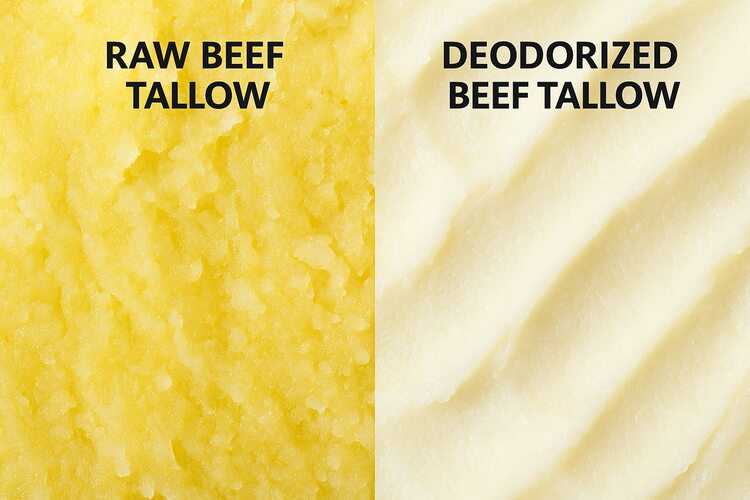
Deodorization also subtly influences color. Raw tallow can range from creamy white to pale yellow depending on the animal’s diet and the rendering method used. Deodorized tallow tends to be more uniformly white because the odor-causing compounds and pigments that contribute to the natural coloration are partially removed. This doesn’t reflect a loss of nutritional value—it’s simply the by-product of refining out the aromatic components.
The texture is where the difference becomes most noticeable for skincare applications. Non-deodorized tallow can feel slightly denser and may retain tiny variations in grain or firmness, especially if rendered in small batches. Deodorized tallow typically has a smoother, more consistent texture that spreads more like a commercial balm. This doesn’t mean one is superior; it simply means deodorized tallow is easier to work with for formulators and more familiar in feel for people used to conventional moisturizers.
What deodorization does not do is break down the saturated fats, destabilize the tallow, or rob it of its core properties. The backbone of the fat—stearic acid, palmitic acid, and oleic acid—remains intact. These are the components that make tallow stable, skin-compatible, and resistant to rancidity. The refining process affects user experience more than biochemical substance.
Nutrient Comparison: Does Deodorizing Remove Vitamins?
One of the most common concerns surrounding deodorized tallow is the idea that refining somehow strips away the nutrients that make tallow valuable in the first place. It’s an understandable worry—after all, heavily refined seed oils lose much of their integrity during processing. But tallow behaves very differently.
Tallow is naturally rich in stable saturated fats, particularly stearic acid and palmitic acid. These fatty acids form the structural backbone of the fat and are remarkably resistant to heat and oxidation. During steam deodorization—the method used for most high-quality deodorized tallow—the tallow is heated, exposed to steam, and placed under vacuum to lift away volatile compounds responsible for the aroma. The key word here is volatile. These molecules evaporate easily. The fatty acids, however, do not.
In other words, the parts of tallow that make it beneficial for skin and cooking remain firmly in place. Deodorizing removes scent compounds, not the fatty-acid profile that gives tallow its stability, compatibility with human sebum, and resistance to rancidity. This is why deodorized tallow behaves almost identically to raw tallow in skincare formulations: it softens, protects, and supports the skin barrier just as well, but without the natural scent that some people find off-putting.
There may be a slight reduction in certain trace components—small amounts of natural pigments or aromatic molecules that contribute to tallow’s yellow tint or subtle flavor. But there is no evidence that these compounds meaningfully affect the performance or nutritional value of tallow when used in skincare. These losses are comparable to removing the aroma from butter: the fat remains the same, even if the sensory experience changes.
What does significantly alter tallow quality is not deodorization itself, but industrial refining, where harsh bleaching agents, chemical oxidizers, or preservatives are introduced to stabilize low-grade tallow for mass manufacturing. This is not typical of the tallow used for food or skincare, and it’s not what “deodorized” means in the clean, steam-refined sense. The problem is not deodorizing; it’s the industrial practices that sometimes accompany poor-quality raw materials.
So does deodorization remove nutrients? Practically speaking, no. It alters sensory properties—smell, color, and texture—while leaving the functional properties intact. For consumers who want the benefits of tallow without the natural aroma, deodorized tallow offers a cleaner, more neutral option without compromising what matters.
Which Is Better for Skin? Deodorized or Non-Deodorized?
Whether deodorized or non-deodorized tallow is “better” for skin depends less on the fat itself and more on the person using it. Both forms share the same fundamental fatty-acid structure, which is what makes tallow so compatible with the skin in the first place. Stearic acid, palmitic acid, and oleic acid support the skin barrier, mimic the lipid profile of human sebum, and help calm irritation. From a biological standpoint, the core benefits are the same.
The real difference lies in the user experience.
Non-deodorized tallow, in its raw form, carries the unmistakable scent of the animal it came from. For people who value minimal processing or who follow a more “ancestral” approach to skincare, the aroma is part of the appeal. It signals authenticity, simplicity, and a direct connection to the source. Raw tallow can also feel slightly denser or more textured, which some individuals prefer for dry or compromised skin, eczema patches, or areas needing extra occlusion.
However, the natural scent can be polarizing. Some find it earthy and comforting; others find it distracting or unpleasant. This is especially true for people new to tallow-based skincare or those who want a more neutral-smelling moisturizer.
Deodorized tallow offers the same skin benefits without the beefy aroma. The scent is softened or removed through steam or gentle refining, leaving behind a smooth, neutral fat that blends seamlessly with essential oils or other natural ingredients. For most people, especially those accustomed to commercial skincare products, deodorized tallow simply feels more familiar and easier to reach for daily. It’s also more versatile: it works in facial creams, body balms, lip products, and anything where fragrance is expected to be either subtle or intentional.
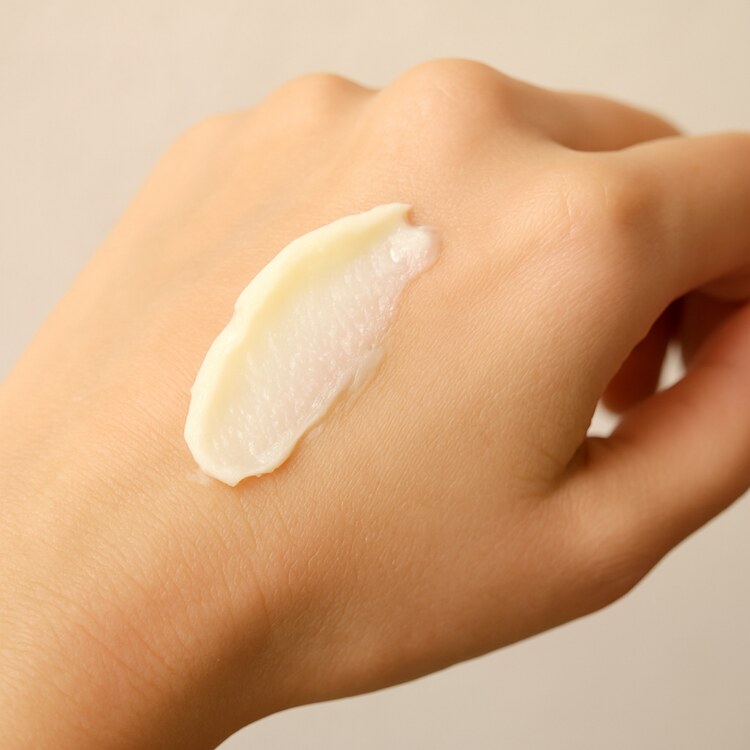
Importantly, deodorizing does not strip away the fatty acids that make tallow beneficial. The skin-care performance is effectively identical between the two. What changes is the sensory profile, not the therapeutic one.
If you prefer the most traditional version of tallow, and you don’t mind or even enjoy the natural scent, non-deodorized tallow is a perfectly valid choice. But if you want tallow’s benefits without the aroma, or you’re creating products intended for broader appeal, deodorized tallow will be the better fit. In practical terms, most consumers ultimately prefer deodorized tallow for everyday skincare simply because it’s more pleasant to use.
Both versions work. The question is which one you’re more likely to apply consistently—and for most people, that’s the deodorized form.
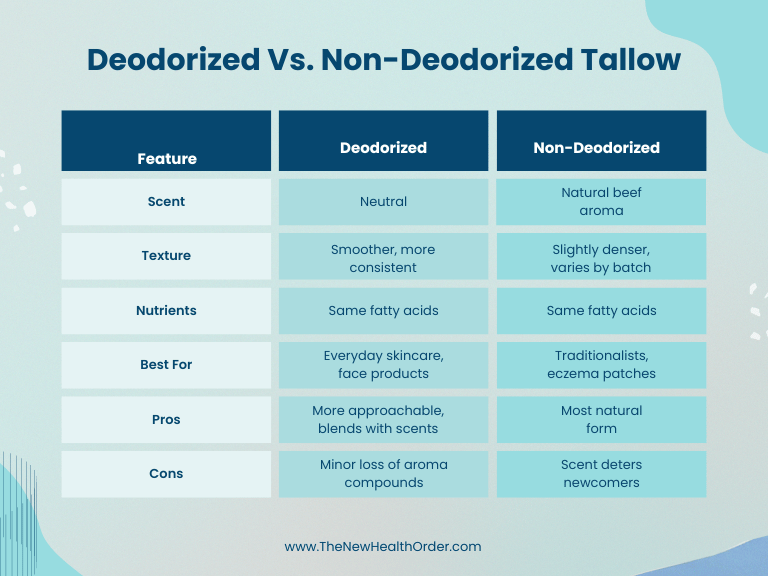
| Feature | Deodorized | Non-Deodorized |
| Scent | Neutral | Natural beef aroma |
| Texture | Smoother, more consistent | Slightly denser, varies by batch |
| Nutrients | Same fatty acids | Same fatty acids |
| Best For | Everyday skincare, face products | Traditionalists, eczema patches |
| Pros | More approachable, blends with scents | Most natural form |
| Cons | Minor loss of aroma compounds | Scent deters newcomers |
Is Deodorized Tallow Healthy or Safe?
A surprising amount of concern around deodorized tallow comes from assumptions that it must be “processed,” “chemically altered,” or somehow less natural than raw tallow. In reality, high-quality deodorized tallow is simply tallow with the aroma dialed down — not a fundamentally different fat.
Deodorization, when done properly, uses steam, vacuum, and controlled heat to lift away the light, volatile compounds responsible for tallow’s scent. No solvents are added, no artificial stabilizers are required, and the fatty-acid structure remains intact. This is why deodorized tallow performs the same way on the skin as raw tallow: it softens, protects, and supports the skin barrier with the same profile of saturated and monounsaturated fats.
Where safety concerns do appear is in the industrial refining of low-grade tallow. Some large-scale processors bleach or chemically deodorize tallow destined for commercial soaps or manufacturing. These industrial fats may also be stabilized with preservatives like butylated hydroxytoluene (BHT) to extend shelf life. This is not representative of clean, skincare-grade tallow, but the two are often conflated online, which is why “deodorized tallow” carries more suspicion than it deserves.
When you strip away the misconceptions, the picture is straightforward: steam-deodorized tallow is safe, stable, and effectively identical to raw tallow in composition. It simply smells better. For most people—especially those who want the benefits of tallow without the natural aroma—deodorized tallow is not only safe, but more pleasant to use. As with any ingredient, the real determinant of quality isn’t the deodorization; it’s the source of the fat and the integrity of the rendering process.
In other words, deodorized tallow is as healthy and safe as the tallow it comes from. And when the starting material is high-quality, grass-fed beef fat, both deodorized and raw tallow are exceptionally clean skincare fats.
Deodorized vs Non-Deodorized Tallow for Cooking
While most of the modern interest in tallow revolves around skincare, many people still use it as a cooking fat — and for good reason. Tallow is one of the most stable, heat-resistant fats available, and its saturated-fat profile makes it far less prone to oxidation than modern vegetable oils. When it comes to choosing between deodorized and non-deodorized tallow in the kitchen, the differences are subtle but worth understanding.
Non-deodorized tallow brings a richer, more traditional flavor. This is the tallow your great-grandparents would have used for frying, roasting, and pastry making. It carries a gentle beef aroma that can enhance savory dishes, much like butter adds depth to cooking even when used sparingly. For people who specifically want that old-fashioned character — or who are using tallow to replace seed oils in their everyday cooking — raw tallow offers authenticity and a fuller culinary profile.
Deodorized tallow, on the other hand, has a much milder scent and flavor due to the removal of volatile aromatic compounds. The fat itself cooks the same way, with the same high smoke point and stability, but without the distinct beefy note. This makes deodorized tallow a practical option for recipes where you want neutral flavor: sautéing vegetables, baking, or deep-frying foods where beef aroma might be distracting. It’s also the version preferred by many restaurants and food manufacturers for consistent results.
In terms of performance, both types handle heat exceptionally well. Deodorization doesn’t degrade the fat or lower its smoke point, and raw tallow’s aroma doesn’t make it inherently “better” nutritionally. The choice comes down to the flavor you want in the final dish.
If you’re cooking foods that benefit from a hint of beef richness — potatoes, eggs, roasted vegetables, cast-iron cooking — raw tallow delivers a depth you won’t get from neutral oils. If you want versatility and a cleaner flavor profile, deodorized tallow is the more adaptable option. Many home cooks end up using both, depending on the dish.
How to Choose the Right Tallow (Checklist)
If you want a quick way to assess tallow quality without getting lost in technical details, these are the only things that genuinely matter. If a product passes these checks, it’s almost always a good one.
• Grass-fed source clearly stated
If the label doesn’t say grass-fed (or grass-finished), assume it’s not.
• No chemical refining or bleaching
Look for terms like “steam-deodorized,” “naturally deodorized,” or “rendered tallow.”
Avoid anything vague about “refining.”
• No synthetic preservatives (like BHT)
Pure tallow doesn’t need them.
• Ingredients list is short and clean
For cooking: just tallow.
For skincare: tallow plus simple natural ingredients.
• Color looks natural
Creamy white to pale yellow is normal.
Bright, paper-white tallow can indicate heavier processing.
• Texture is smooth, not grainy or waxy
A good sign of proper rendering and storage.
• The producer explains their process
If the company won’t tell you how the tallow is sourced or processed, that’s your answer.
• Choose deodorized or raw based on your use
Deodorized: best for skincare (neutral smell).
Raw: best for cooking (more flavor).
Final Thoughts
Deodorized tallow can sound intimidating if you’re new to it, especially when the word “refined” has been so thoroughly corrupted by the modern food industry. But when you strip away the confusion, the picture becomes much simpler. Deodorization, in its natural form, is not a chemical overhaul—it’s a gentle process that neutralizes scent without altering the structure or benefits of the fat. Raw, non-deodorized tallow offers the same fatty-acid profile and the same stability; it simply keeps the natural aroma that some people appreciate and others don’t.
What matters far more than deodorization is the quality of the fat itself and the integrity of the people producing it. Across everything I’ve tested and researched, the deciding factor has never been deodorization alone — it has always been the quality of the fat and the honesty of the producer’s process.
Grass-fed sourcing, clean rendering, transparency, and the absence of industrial additives tell you far more about whether a tallow is worth using than whether the scent has been softened. Once you know how to distinguish naturally processed tallow from heavily refined industrial by-products, the decision becomes far easier.
If you want the most traditional experience and don’t mind the natural aroma, raw tallow is a perfectly valid choice. If you want the benefits of tallow in a form that feels neutral, approachable, and easy to use every day, deodorized tallow fits that need without compromising quality. Neither option is inherently “better” or “worse”—they simply serve different preferences.
At the end of the day, you’re choosing between two versions of the same remarkably stable, skin-compatible fat. When sourced and processed with care, both deodorized and non-deodorized tallow are clean, natural alternatives to the highly processed oils and lab-engineered moisturizers that dominate the modern market. Your decision comes down to what you value more: tradition and aroma, or neutrality and versatility.
FAQs
Is deodorized tallow safe for skin?
Yes. When deodorized through steam or vacuum, tallow remains chemically unchanged and safe. Concerns usually come from industrial tallow, not skincare-grade versions.
Does deodorized tallow lose nutrients?
No. Deodorization removes only volatile scent compounds. The core fatty acids—stearic, palmitic, and oleic—remain intact, so skin benefits are the same.
Which is better for skincare: deodorized or raw tallow?
Most people prefer deodorized tallow because it has a neutral scent and smooth texture. Raw tallow works just as well but has a noticeable beef aroma.